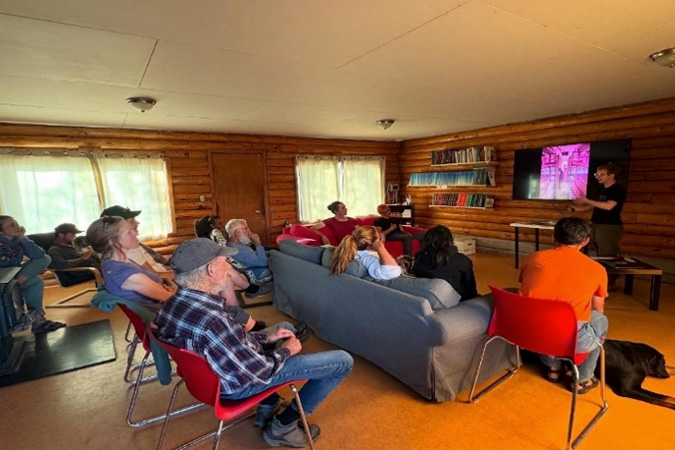


In the 2025 summer season, KLRS users included researchers, students, teachers, Yukon and BC First Nations, government scientists, artists, and community members. The station hosted 480 guests from 51 groups!
Please contact us if you are interested in receiving a copy of the Kluane Lake Research Station 2025 Summary report.
Organization: University of Maine
Principal Investigator: Dr. Karl Kreutz
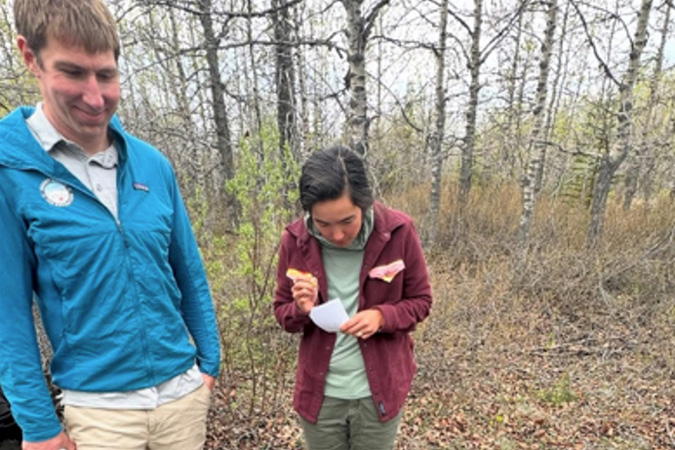
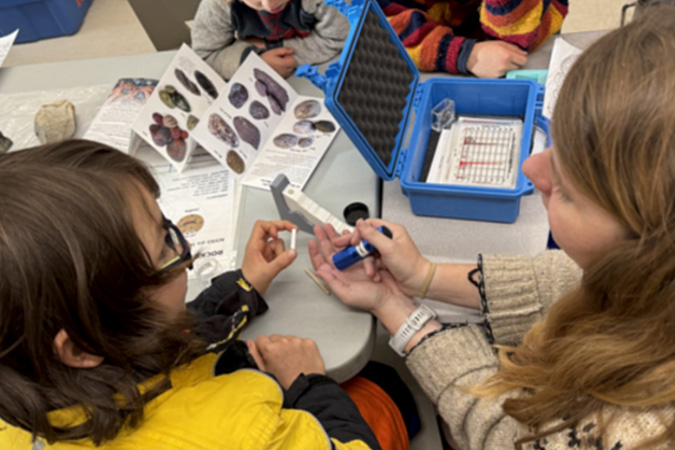
Glaciologists (Dom Winski, Inga Kindstedt, and Sicely Sohn) from the University of Maine spent a week at KLRS doing engagement and outreach in preparation for a potential future research project in the Icefield Ranges. During their time in Kluane, they met with a variety of local communities and groups, including KFN and CAFN, Parks Canada, students, and locals. The team presented at a KLRS community night and brought glaciology kits to teach the Haines Junction grade 6/7 class how to study glaciers using real data and methods.
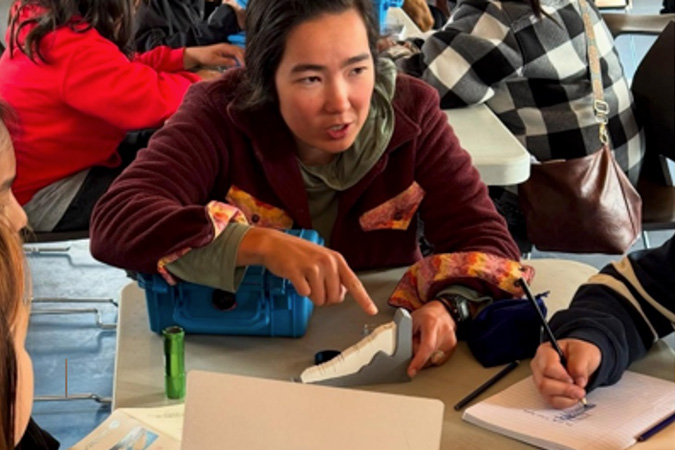
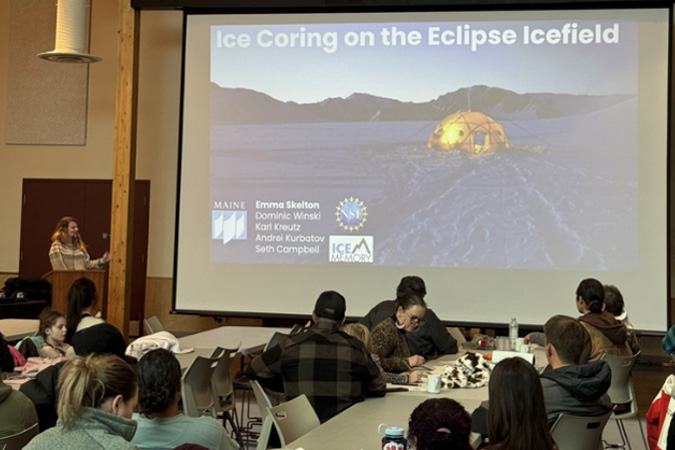
CAFN invited the group to present at their Dakwäkäda Mountain Festival at Da Kų Cultural Centre in November. PhD Candidate Emma Skelton provided a poster, helped with kid’s activities, and presented “Ice Coring at the Eclipse Icefield” at the festival. The following points summarize her presentation:
The team published a paper in 2025: "Ongoing firn warming at Eclipse Icefield, Yukon, indicates potential widespread meltwater percolation and retention in firn pack across the St. Elias Range".
The paper describes 2023 glacial melt research at Eclipse Icefield, near the head of the Dän Zhùr (Donjek) Glacier. Results include:
Organization: Université de Montréal
Principal Investigator: Dr. James King
Dr. James King from the Université de Montréal came to KLRS to maintain his weather stations in the Ä’äy Chù Valley. “These stations record measurements to help constrain what climate factors might be controlling the dust storms. With some of the weather stations recording data since 2017, combined with remotely sensed surface conditions, some trends are starting to emerge. For example, at the start of the Ä’äy Chù, dust emitting winds occurred almost 50% of the last month, a 7.8 m/s averaged hourly maximum.”
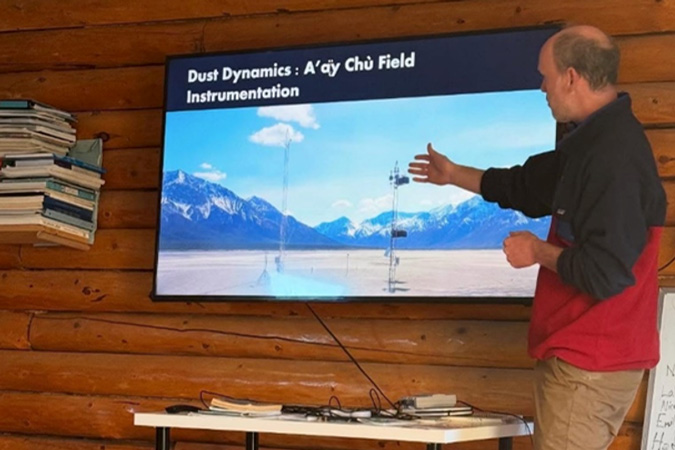
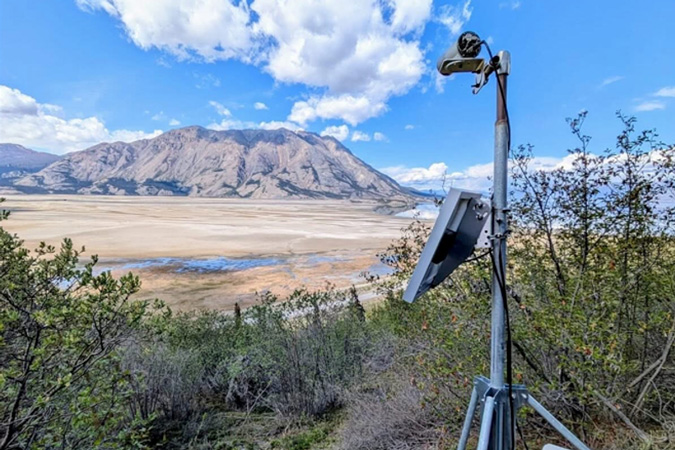
Dr. King presented some of this work at a KLRS community night. One of his instruments, a Cimel sun photometer, is operated and maintained at KLRS. He is also part of the Kluane Climate Futures project, which is a collaborative project with Kluane First Nation, Yukon University, Université de Montréal and University of Ottawa that aims to address community climate priorities.
Arnold R. Downey, PhD student at Université de Montréal, collaborates with Dr. King on research in the Ä’äy Chù Valley. He had a poster at the 2025 ArcticNet Annual Scientific Meeting, titled “Emerging Mineral Dust Source in ’A’ą̈y Chù’ Valley, Yukon, Canada Poses Potential Health Risk via Exposure to Metal and Metalloids Enriched in PM10 and PM2.5 Size Fractions in the Lhù'ààn Mân (Kluane Lake) Region”. The associated paper was published in early 2026: "Emerging Mineral Dust Source in ’A’ą̈y Chù’ Valley, Yukon, Canada Poses Potential Health Risk via Exposure to Metal and Metalloids Enriched in PM10 and PM2.5 Size Fractions".
Organizations: ÉTS Montreal, McGill University, and Ohio State University
Principal Investigator: Dr. Michel Baraër (ÉTS Montreal)
Hydroglaciologists from ÉTS Montreal (Dr. Michel Baraër, Dr. Janie Masse-Dufresne, Bastien Charonnat), McGill (Eole Valence), and Ohio State (Adam Tjoelker) spent 24 days conducting fieldwork in Shár Shaw Tagà (Grizzly Creek) Valley. The team is studying how climate change is impacting the local cryosphere (glaciers, permafrost, buried ice, and snow) and hydrology (water). They use multiple methods to collect data, including time-lapse cameras, geophysical surveys, water sampling, GPS, thermal imaging, and drone surveys.
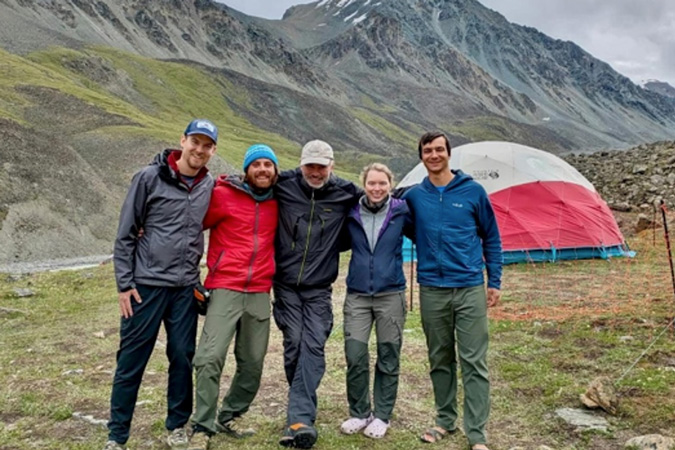
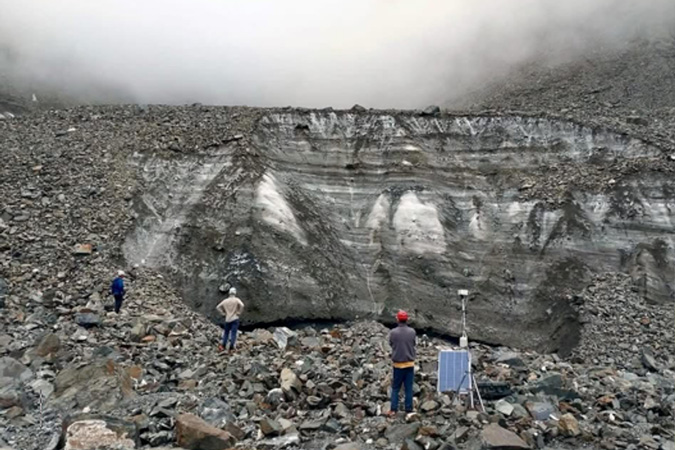
After 10 years in the St. Elias mountains, and 5 years in Shár Shaw Tagà Valley, the team has completed their data collection in the area. They met with KFN and CAFN to discuss future partnerships and potential field sites where they can apply their methods to study other mountain catchments of interest to the Nations. In collaboration with KLRS, the group co-sponsored a community dinner for Kluane First Nation. The team also shared their work at a KLRS community night. Eole Valence and Bastien Charonnat had posters/presentations on their Yukon research at the ArcticNet Annual Scientific Meeting in Calgary in December 2025.
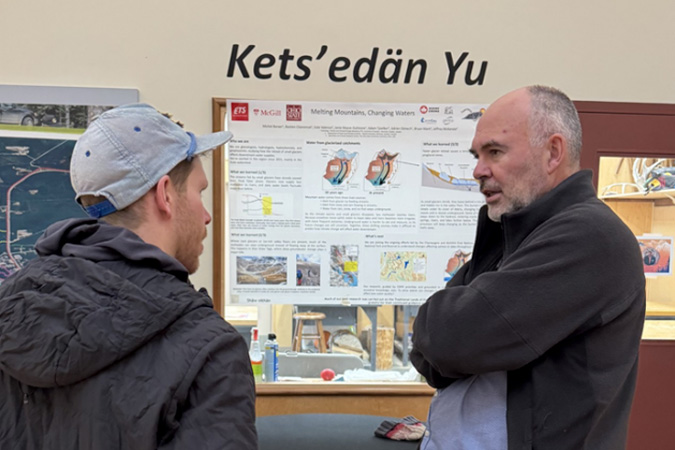
CAFN invited the group to present at their Dakwäkäda Mountain Festival at Da Kų Cultural Centre in November. Dr. Michel Baraër provided a poster and presented “Melting Mountains, Changing Waters” at the festival. For next season, the team is joining the ongoing efforts led by the Champagne and Aishihik First Nations and Kluane National Park and Reserve to understand changes affecting salmon in lakes throughout CAFN’s Traditional Territory. His presentation provided a high-level summary of what they have learned over the past 10 years:
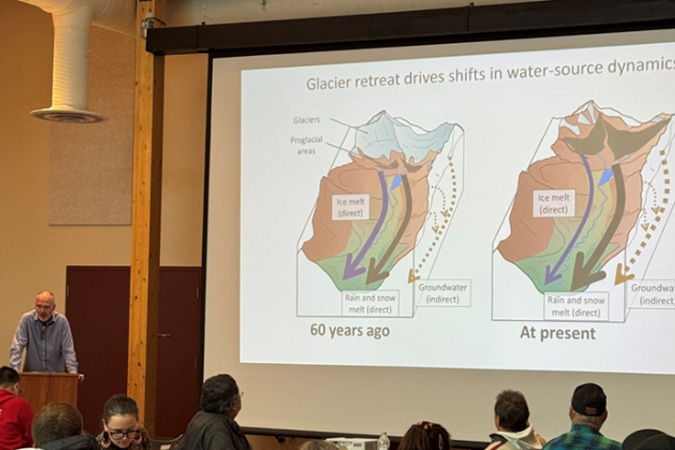
The team published the following papers in 2025:
Retreating mountain glaciers, such as those in the Shár Shaw Tagà Valley, leave behind rocky landscapes with large boulders that accelerate snowpack ablation (melting). Boulders store and release heat, enhancing snow melt beyond radiative effects from the sun and earth. The enhanced melt has implications for snow water resources in the Kluane region, which has relatively low snow accumulation in the winter.
Climate change is altering the water cycle in mountain regions as glaciers melt, but slower-degrading rock glaciers remain influential. The study examines how a rock glacier in Shár Shaw Tagà (Grizzly Creek), Yukon, interacts with a riverbed, using a combination of remote sensing and hydrochemical methods. It shows that rock glaciers shape river channels, affect groundwater flow, and encourage ice formation in winter.
Organization: Queen’s University
Principal Investigator: Dr. Ryan Danby
Nahuel Deltrozzo and Emily Kidston from Queen’s University spent 6 weeks at KLRS collecting wood samples from spruce trees across the Southwestern Yukon. As part of his PhD, Nahuel is interested to see if the recent changes to summer growth patterns visible in the satellite images match with those from wood samples. These results will contribute to our understanding of phenology, which is the study of the changes to growing seasons that are becoming more prevalent due to climate change. This project is part of Dr. Ryan Danby’s long-term research program in the area.
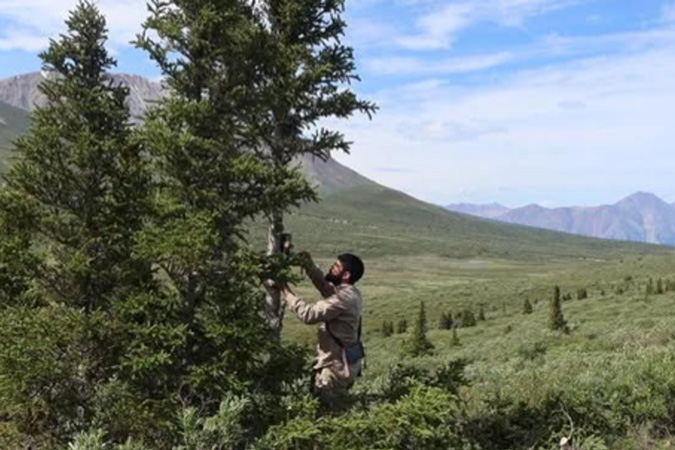
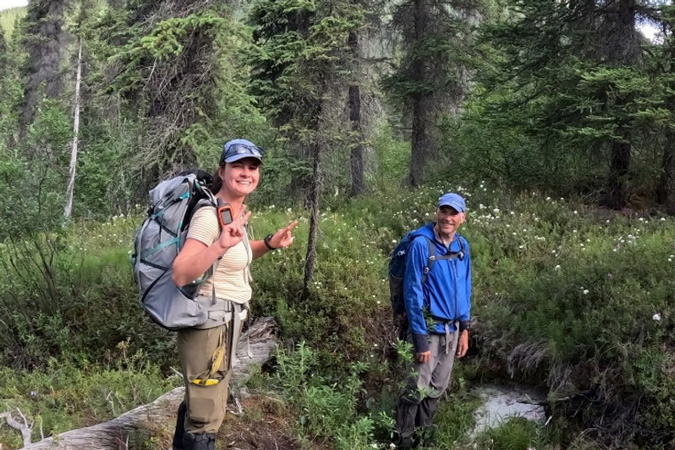
Preliminary findings using satellite imagery suggest that “many low-lying areas mainly within the Shakwak trench are experiencing longer growing seasons. Across the southwest Yukon, growing seasons are lasting on average 1.77 days more per decade, with some regions experiencing increases of up to 7.18 days per decade. Along with elevation, the rates of change in growing season temperatures and solar radiation are the most important variables for change. Out of all vegetation types, needleleaf forests are experiencing the most rapid change.”
Organizations: Simon Fraser University, Yukon Geological Survey
Principal Investigator: Dr. Brent Ward
Geologists Dr. Brent Ward (Simon Fraser University) and Derek Cronmiller (Yukon Geological Survey) stayed at KLRS while doing fieldwork at Män Shiʼaya (Silver Creek). Dr. Ward’s research aims to test a new technique using cosmogenic noble gas nuclides to date geological events.
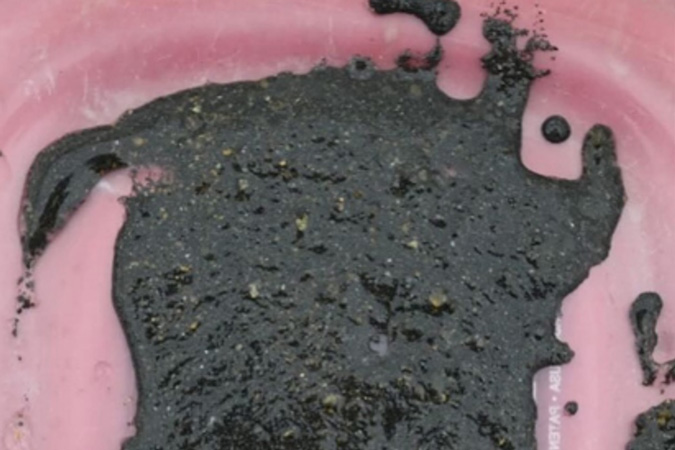
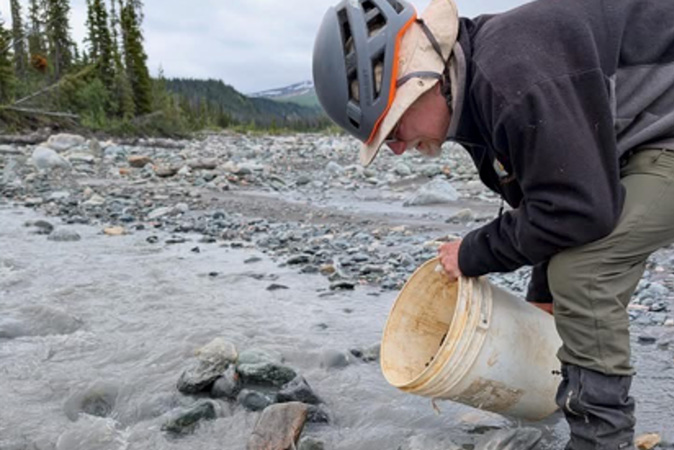
A cosmogenic nuclide is a specific atom created when cosmic rays from space strike Earth’s surface and change the atoms in rocks, allowing geologists to measure how long the sediments have been exposed at the surface, or when they were buried. To date ancient gravel deposits in Män Shiʼaya, they ran gravel through a small sluice and panned out a small heavy mineral called zircon, which will be sent to the lab for analysis.
Brent and Derek completed the Yukon First Nations 101 course prior to conducting fieldwork.
Organization: Simon Fraser University
Principal Investigator: Dr. Sergio Sepúlveda
Catalina Pino-Rivas from Simon Fraser University (SFU) is studying potential earthquake-induced landslides in Southwest Yukon for her PhD with Dr. Sergio Sepúlveda. She stayed at KLRS with geologists Dr. Sepúlveda and Brent Ward (SFU), Panya Lipovsky (Yukon Geological Survey), and William Murphy (University of Leeds) to investigate landslides at Thechàl Dhâl’ and Aishihik.
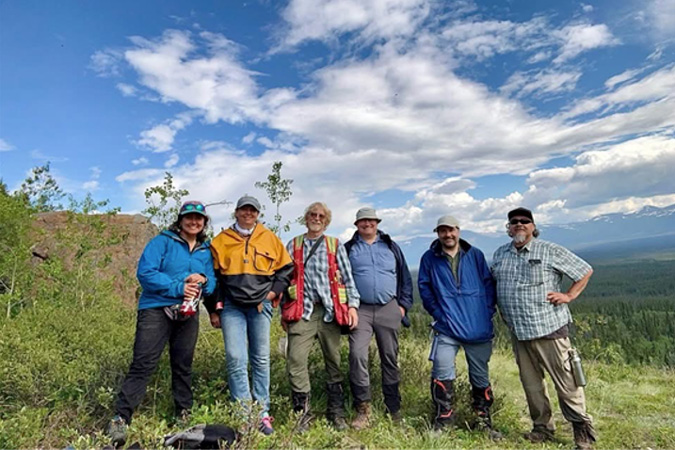
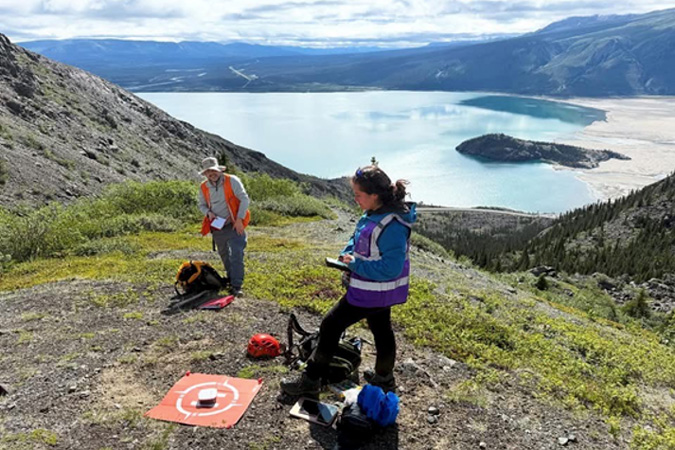
Their aim is to understand patterns that may trigger landslides, such as earthquakes and permafrost thaw. They flew a drone over the landslides to create a 3D model, took measurements, and collected samples for further testing in their lab. Trish Hume, Keith Patterson, and Tyler Taylor from CAFN’s Heritage, Lands and Resources department joined the geologists for their fieldwork at Aishihik Landslide, providing the geos with support, logistics, and knowledge. Catalina presented her research plans at KLRS community night.
Organizations: University of Ottawa, University of Waterloo, and Cardiff University
Principal Investigators: Dr. Brittany Main, Dr. Luke Copland, Dr. Christine Dow
Glaciologists from the Universities of Ottawa, Waterloo, and Cardiff based at KLRS in July while they were undertaking fieldwork on the glaciers flowing out of the St. Elias Icefields, including at Nàłùdäy, Dän Zhùr, Kaskawulsh and other glaciers. The group included Dr. Brittany Main (UOttawa/UWaterloo), Dr. Luke Copland’s group at University of Ottawa (Dr. Dorota Medrzycka, Jaime Dube, Tatiana Solfjell Huard), Dr. Christine Dow’s group at the University of Waterloo (Robert Bahensky, Peter Wray), and Dr. Mike Prior-Jones’ group at Cardiff University (Lisa Craw).
Their research aims to understand how the glaciers are moving, how much ice there is, and the dynamics behind glacier surging (rapid increase in ice flow). They completed annual maintenance on their GPS units, time-lapse cameras, and weather stations, conducted aerial photography surveys of several glaciers, and repaired a surface receiver for their wireless instrument within Dän Zhùr glacier. Back in April, they flew air-based ice penetrating radar surveys to measure ice thickness.
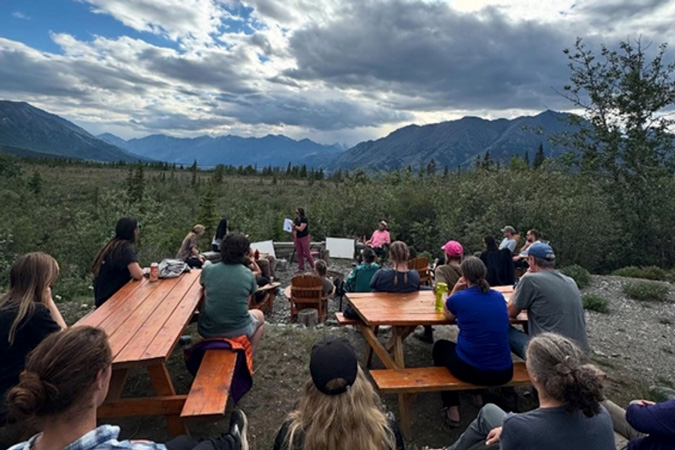
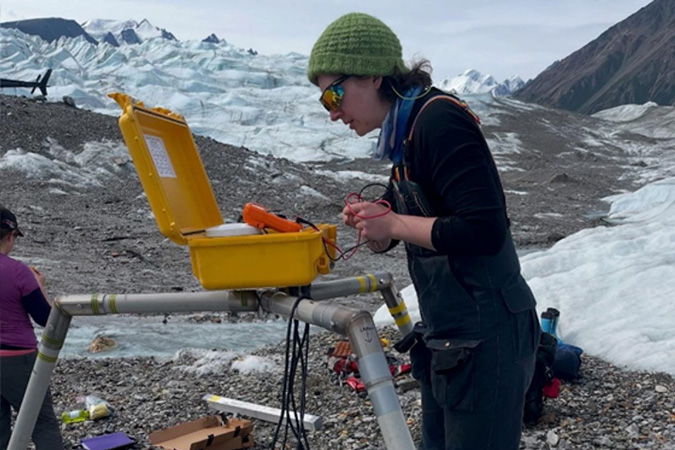
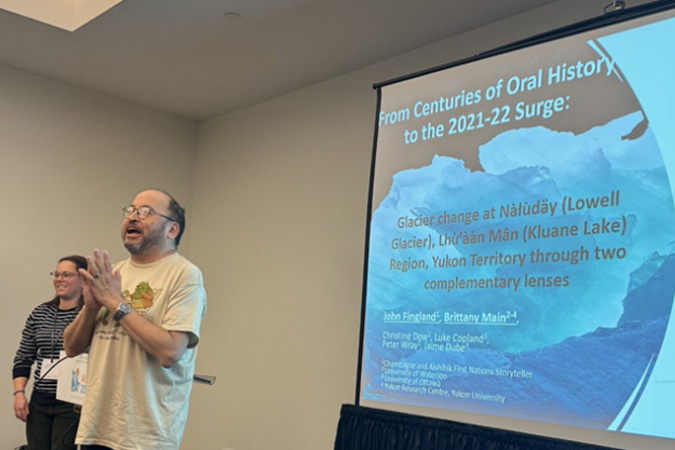
Environment Officer Kenny Joe from Champagne and Aishihik First Nations (CAFN) and Kluane First Nation (KFN) Resource Manager Hannah Currie joined the team on different days for helicopter fieldwork. In collaboration with KLRS, the group co-sponsored a community dinner for KFN and attended CAFN’s General Assembly. At different KLRS community nights, Dr. Brittany Main assisted CAFN Interpreter John Fingland for glacier storytelling, and MSc student Erika Brummel presented about her research in the Arctic, bringing “Kaskawulsh Crunch” ice cream to share with locals. The group provided a poster at CAFN’s Dakwäkäda Mountain Festival at Da Kų Cultural Centre in November 2025, and Dr. Main helped KLRS Manager Kim Hatcher with kid’s science activities at the festival. At the ArcticNet Annual Scientific Meeting in December 2025, Dr. Main and John Fingland presented in the KLRS-KFN-CAFN session, and graduate students Peter Wray and Jaime Dube presented in other sessions. Several group members also presented their Yukon research at conferences in Austria (Workshop on the Dynamics and Mass Budget of Arctic Glaciers, European Geophysical Union General Assembly).
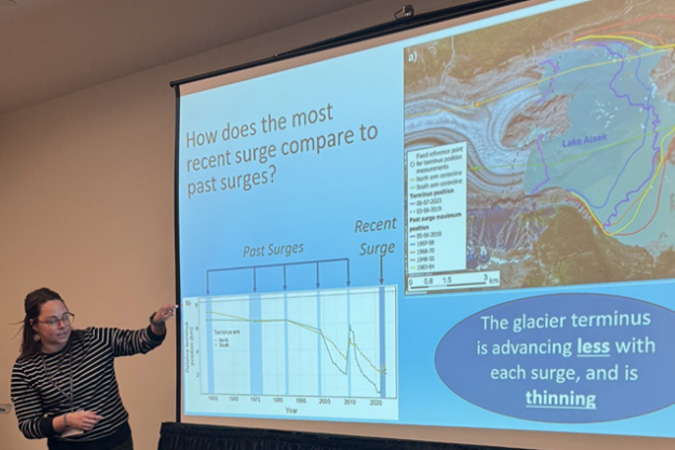
The team and other collaborators published the following papers in 2025:
Fisher Glacier underwent two surges (periods of fast flow/rapid advancement) since 1948: during approximately 1969–72 and 2013–16. The surges are characterized by an advanced terminus position, intense surface crevassing, high surface velocities, and a down-glacier transfer of mass. Between these periods, velocities were generally low, increasing slowly until the second surge in 2013/14, which ended rapidly in July 2016. These surges could be explained by the enthalpy balance theory, which predicts how heat and energy are stored and released in the glacier.
Glacier velocity is an important observation because it affects how ice moves and changes over time, but detailed measurements taken throughout the year are still uncertain and inconsistent. A new open-source Python tool called TICOI combines different data sources to create more accurate monthly glacier velocity records. It was tested on three glaciers in Yukon and western Greenland—including a surging glacier—reducing errors by up to 50% and helping scientists better predict future sea level rise.
Organization: Environment Yukon
Undergraduate students from the Yukon Youth Conservation Corps (Y2C2) stayed at KLRS while assisting biologists from Environment Yukon, Thompson Rivers University, and UBC/Outpost Research Station with the Community Ecological Monitoring Program (CEMP). The group was counting snowshoe hare feces, ground berries, and mushrooms in the area to help CEMP’s mission to determine how the boreal forest ecosystem is responding to climate change.
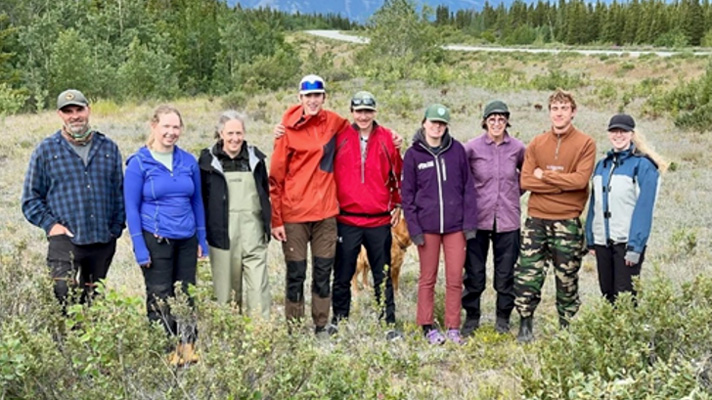
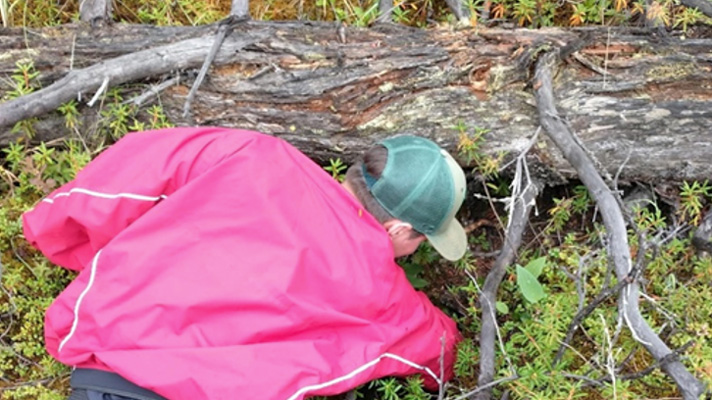
Environment Yukon reported Key Ecosystem Changes from CEMP in 2024, including but not limited to:
Organizations: University of Calgary
Principal Investigator: Dr. Emma Spanswick
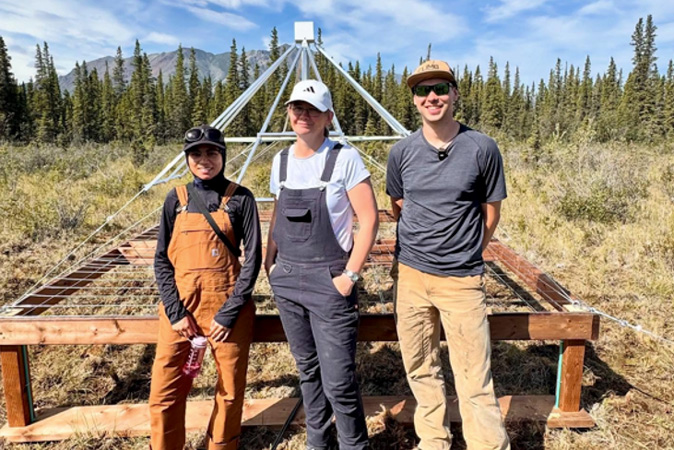
Dr. Emma Spanswick, a space scientist from the University of Calgary’s Department of Physics and Astronomy, led her team in installing a hyper-spectral riometer (HSR) at KLRS in August 2025 to study space weather. Space weather refers to dynamic conditions in the upper atmosphere and ionosphere (where Earth’s atmosphere meets space), driven by energy from the Sun interacting with Earth’s magnetic field. A well-known example is the aurora.
A HSR measures cosmic radio waves that normally pass from space through the Earth’s upper atmosphere. During an aurora, free electrons are created in the upper atmosphere, which absorb some of these radio waves. As a result, fewer cosmic radio waves can reach the HSR antenna on the ground. When the cosmic background signal drops, scientists can detect the impact of auroral activity—even during daylight, when it is invisible to the human eye and cameras.
Dr. Spanswick’s team is monitoring this high-energy aurora and connecting it to distant space processes observed by satellites from CSA, ESA, and NASA missions. The team also aims to improve space weather forecasting and better understand its impact on technology, including satellites, communications, and power systems on Earth.
The HSR installed at KLRS is part of a broader network of instruments supporting space weather research and the development of predictive models to help support affected technologies. The network, called Space Weather Adaptive Network (SWAN), consists of 24 radio sensors deployed across Northern Canada, Alaska, Greenland, and Antarctica. Data from the network is publicly available at https://data.phys.ucalgary.ca.
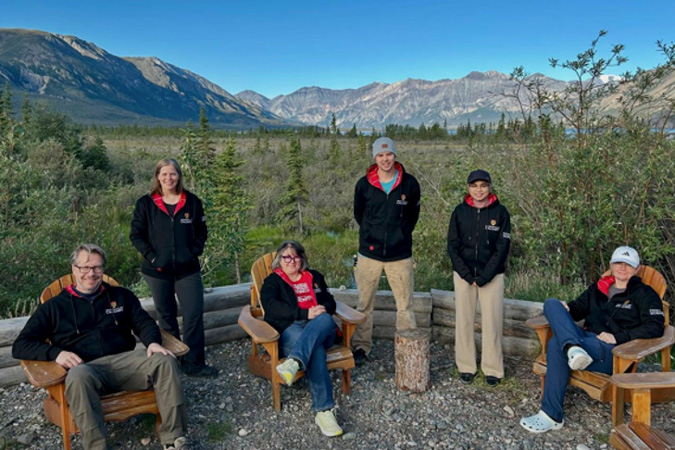
Dr. Kristin Baetz (Dean of Science), Dr. Kris Innanen (Associate Dean of Research), and Dr. Aoife Mac Namara (Dean of Arts) from the University of Calgary also joined Dr. Spanswick’s team at KLRS to observe the HSR installation and learn more about the station.
Organizations: Queen’s University
Principal Investigator: Dr. Ryan Danby
Sandra Yaacoub, PhD student from Queen’s University, spent just over 5 weeks at KLRS. Sandra’s research involves mapping forest conditions throughout the Kluane region, with the goal of quantifying the cumulative impacts of the spruce bark beetle infestation which peaked in 2005. This project is part of Dr. Ryan Danby’s long-term research program in the area.
During her stay, Sandra spent a lot of time with community and met with KFN, CAFN, Parks Canada, and Yukon Government to provide updates on her mapping efforts and foster relationships that will allow her maps to be used for various applications. Sandra participated in KFN’s Hunting and Gathering Camp, spent time on the land with KFN’s Simon Johnson and Resource Manager Hannah Currie, went berry picking with CAFN’s Kenny Joe and his family, volunteered at KFN’s Amazing Race event, and made spruce salve and vapor rub with KFN elder, Dr. Alyce Johnson. The highlight of her trip was visiting local youth at St. Elias Community School and Kluane Lake School, where she taught students of all ages how to make forest measurements with field equipment provided by Parks.
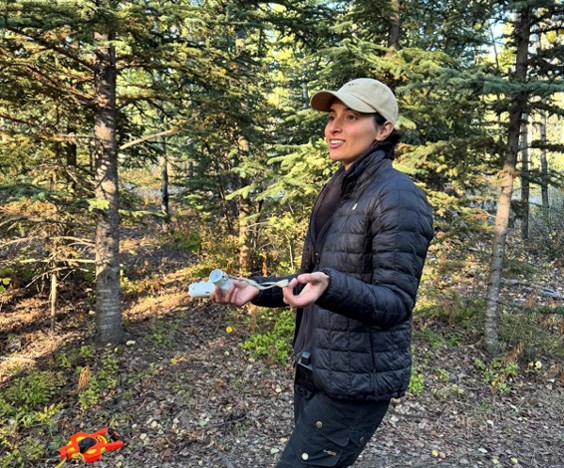
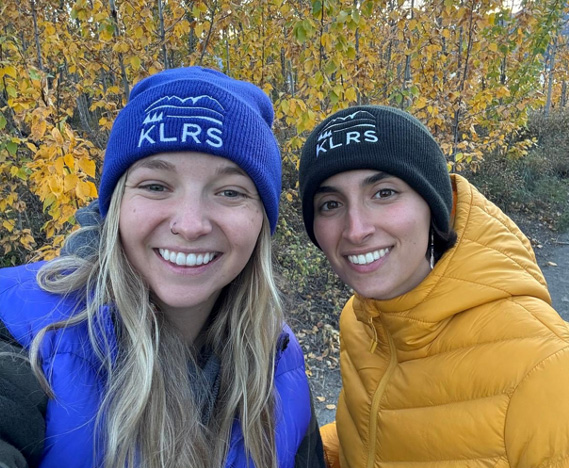
At the KLRS Open House, Sandra presented some preliminary findings to the community. From her 2022 and 2024 forest measurements, her and her team made measurements of around 10,000 overstory trees, saplings and seedlings. Of the overstory trees measured, 31% were beetle-killed and 21% of the locations showed lower densities of regrowth relative to densities of beetle-killed trees. Sandra also presented a poster “Characterizing beetle-disturbed forests with NASA ABoVE airborne lidar and hyperspectral data” at the Silvilaser 2025 conference in Quebec City on September 29 – October 3, 2025.
Organization: Polar Knowledge Canada
Principal Investigator: Dr. Scott Williamson
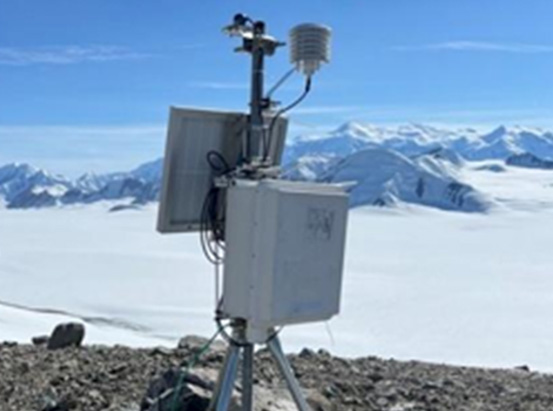
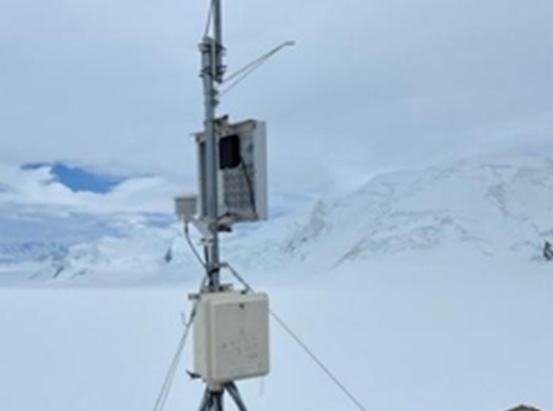
Dr. Scott Williamson is an atmospheric scientist in the Whitehorse branch of Polar Knowledge Canada (POLAR). POLAR is a Government of Canada agency that aims to advance knowledge of Canada’s Arctic and sub-polar regions like Kluane National Park. Dr. Williamson stayed at KLRS in August 2025 while servicing several weather stations in the area that are used to help understand atmospheric dynamics. Data from the stations are also used by other research groups that stay at KLRS, such as University of Ottawa and University of Maine.
“Climate change is a top-down process where the important feedback mechanisms that drive and mediate change occur largely in the atmosphere. To understand climate driven changes occurring at the surface, a better understanding of sub-polar and Arctic atmospheric conditions and changes is required”. Dr. Williamson explains that establishing and maintaining stations for monitoring is important towards gaining this understanding. “The longer-term purpose of these stations is to accurately measure atmospheric conditions, from which a better understanding of surface processes (glacier mass balance, drought, and vegetation change) can be gained”.
In December 2025, Dr. Williamson presented in the KLRS-KFN-CAFN session at the 2025 ArcticNet Annual Scientific Meeting.
Organizations: Trent University, Thompson Rivers University, Yukon Government
Principal Investigators: Dr. Dennis Murray and Dr. Emily Studd
Dr. Emily Studd and two recent graduates (Sophia Bawn and Maggie Jones) from Thompson Rivers University stayed at the log house in July and August while working on several ecological monitoring projects in collaboration with Environment Yukon, various universities (Yukon University, UBC, Alberta, Toronto, Trent), the Kluane Red Squirrel Project, and the Outpost Research Station. Their field work focused on cameras (wildlife and berries) and counts (berries, mushrooms, cones, hare turds).
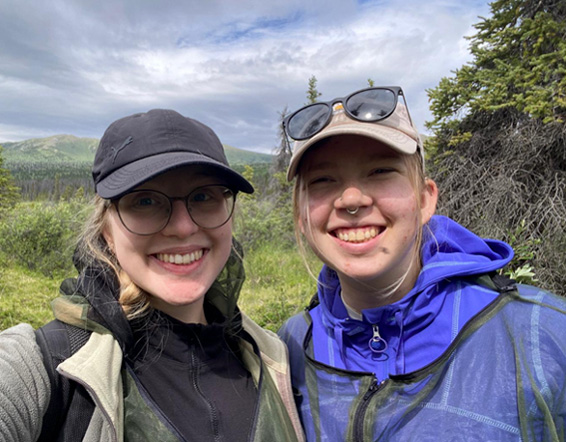
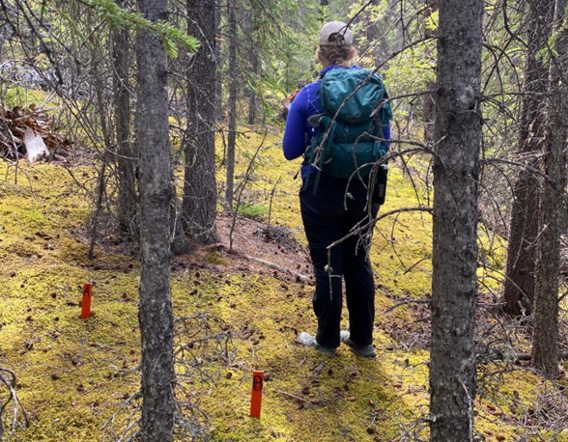
MSc student Rhianne Crowther from Dr. Dennis Murray’s lab at Trent University and various government workers from Environment Yukon were also working on these collaborative ecology projects and snowshoe hare monitoring in March and September.
Several universities ran field courses based out of KLRS for undergraduate and graduate students.
Organization: University of Calgary
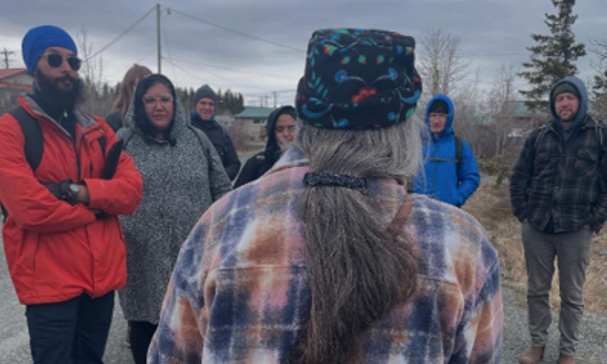
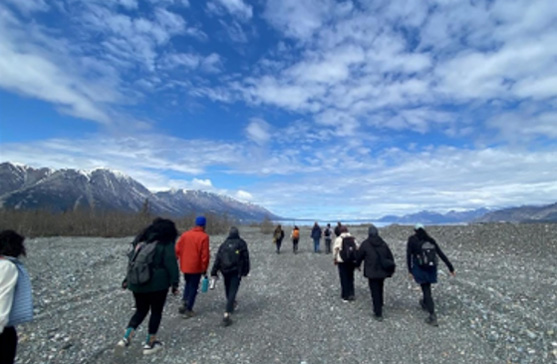
Law students from the University of Calgary spent several days at KLRS as part of their Modern Treaties course, which explores the legal, political, and cultural dimensions of modern treaties in the Yukon. The course provided students the opportunity to engage directly with many Yukon First Nations, Elders, and community leaders, including from Kluane First Nation, Champagne and Aishihik First Nation, Kwanlin Dün First Nation, Carcross/Tagish First Nation, and the Council of Yukon First Nations.
Organization: Carleton University
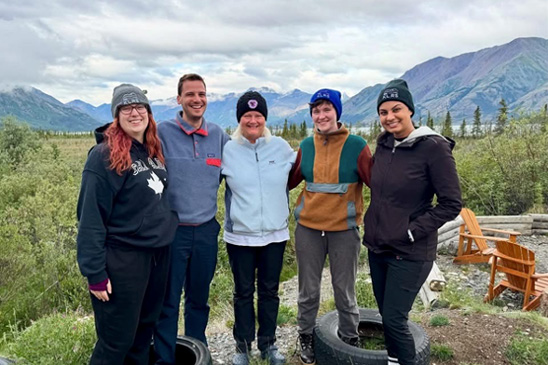
Graduate students from Carleton University’s Northern Studies program finished their program with a field course in the Yukon. While staying at KLRS, they enjoyed connecting with locals in the region. Highlights included visiting Long Ago People’s Place in Champagne, and Kluane First Nation’s Language Camp, where they learned how to make fireweed jelly with Dr. Alyce Johnson. After their time in Kluane, they went to Fort Selkirk with Tutchone Tours, then to Old Crow to work with youth in Vuntut Gwitchin’s T’loo K’at arts-based land camp.
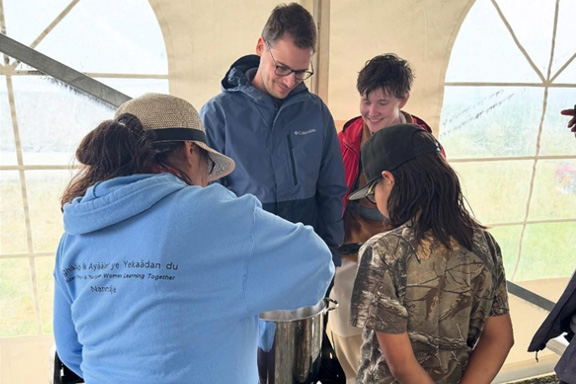
Organization: University of Calgary
The Sustainable Systems Engineering program from the University of Calgary held their Remote Northern Sustainable Systems field course at KLRS, which explores environmentally sustainable community development with a focus on food, water, and energy. The students enjoyed learning from many local experts and knowledge holders from CAFN, KFN, Parks Canada, and Yukon Government. They also learned the importance of building and maintaining relationships when working in communities.
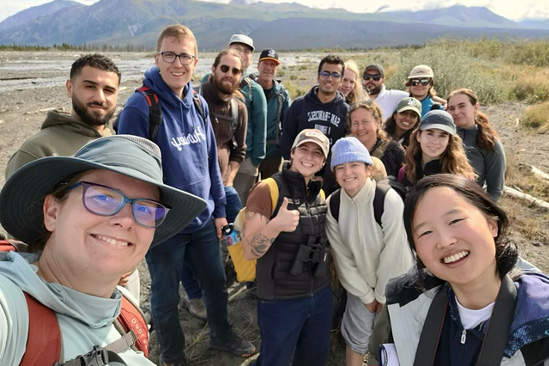
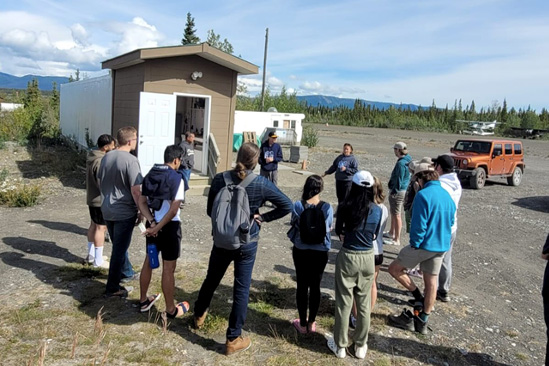
Organization: University of Exeter
Ecology and conservation students from Exeter University visited KLRS as part of their ecology field trip in Yukon and Alaska. The class learned about the boreal forest, population cycles, fire ecology, bark beetle infestation, and Beringia. Local guest speakers included boreal forest and fire ecologists, and First Nation interpreters and artists.
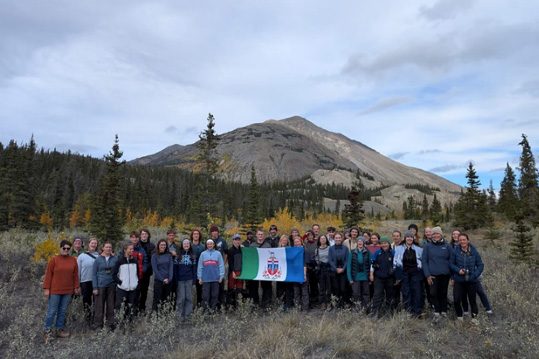
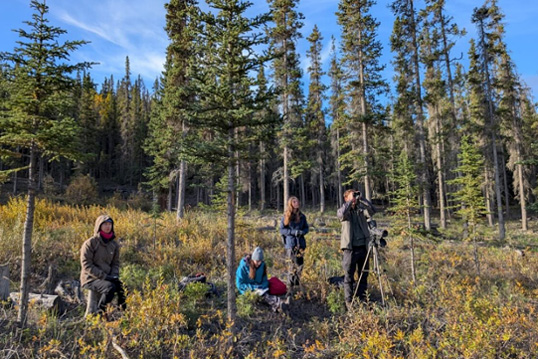
KLRS welcomed primary and secondary schools from near and far to KLRS in 2025.
Wood Street and FH Collins
Two Whitehorse schools stayed at KLRS in May: the Experiential Science 11 program from Wood Street Centre, and the French Emersion 8 program from FH Collins Secondary School. The classes explored the Kluane area and learned about glaciology, geology, and ecology with KLRS staff, researchers, the Yukon Geological Survey, and Parks Canada.
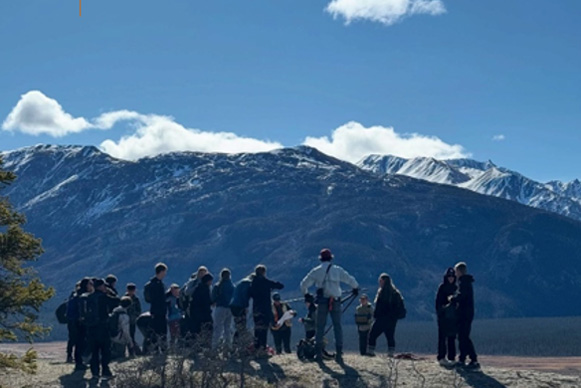
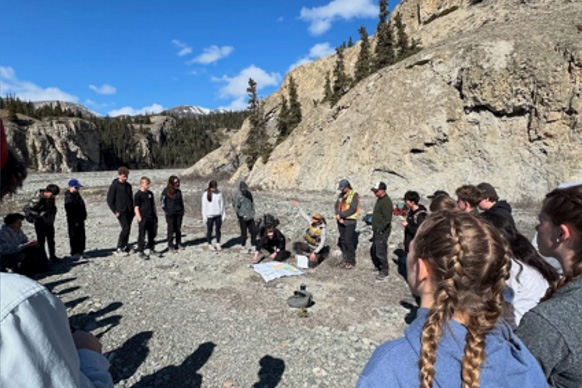
Mt. Carmel and Robert Thirsk
Grade 11 and 12 classes from Calgary (Robert Thirsk High School Environmental Sciences) and Mississauga (Mt. Carmel Secondary School) visited the station to learn about the area from scientists, Indigenous interpreters, and local educators.
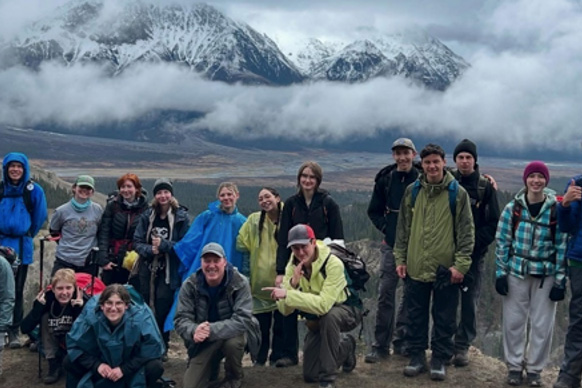
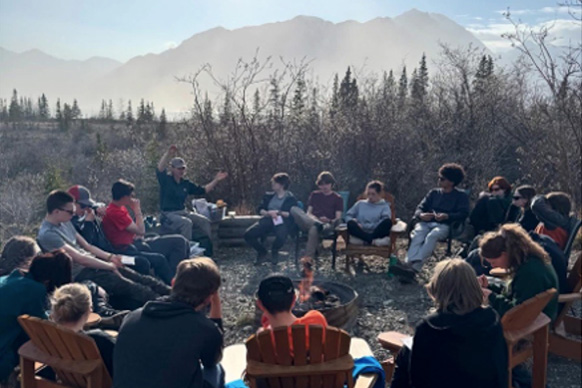
Grade 6 and 7 students from the St. Elias Community School in Haines Junction came to KLRS for a day of learning and fun. The students completed modules from glaciology kits with real data from the University of Maine and learned about microgreens and hydroponics with the Ag1054 project team at KLRS. They also completed a Southern Tutchone scavenger hunt and played soccer on the beach.
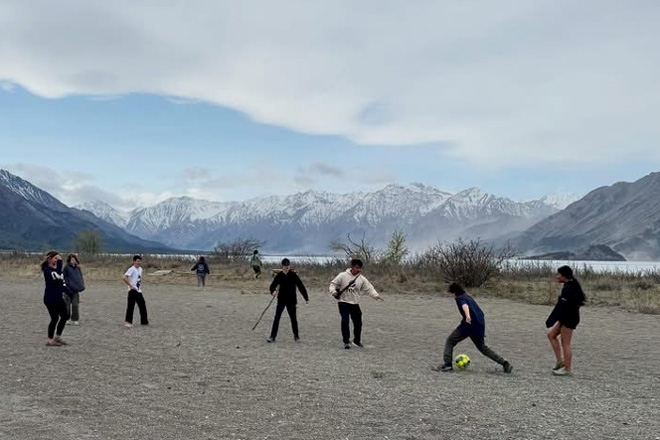
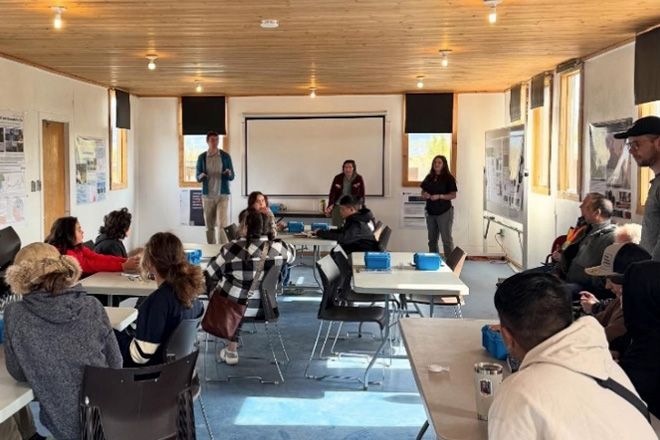
Students from the Kluane Lake School in Destruction Bay, Yukon came to KLRS before the end of their school year. They participated in high-altitude physiology activities with students from University of Calgary, learned about hydroponics and microgreens with KLRS’ Ag1054 team, and made painted piedmont glaciers with University of Waterloo.
Wood Street Centre and FH Collins
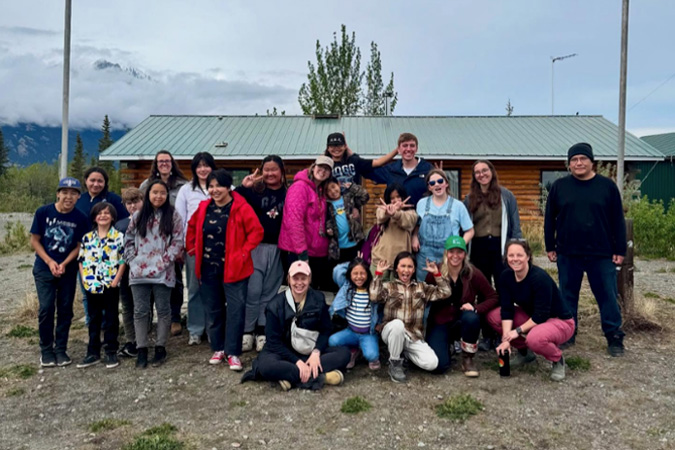
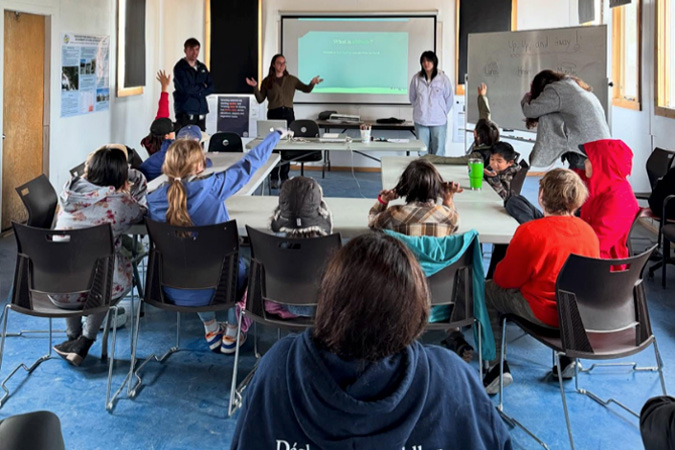
Several Whitehorse schools visited KLRS in September. A grade eight class from FH Collins Secondary School learned about Kluane geoscience from geologists Leyla Weston and Panya Lipovsky (Yukon Geological Survey) and glaciologist Gwenn Flowers (SFU). A high school program from Wood Street Centre learned about hydroponics from the Ag1054 team and explored the Kluane region.
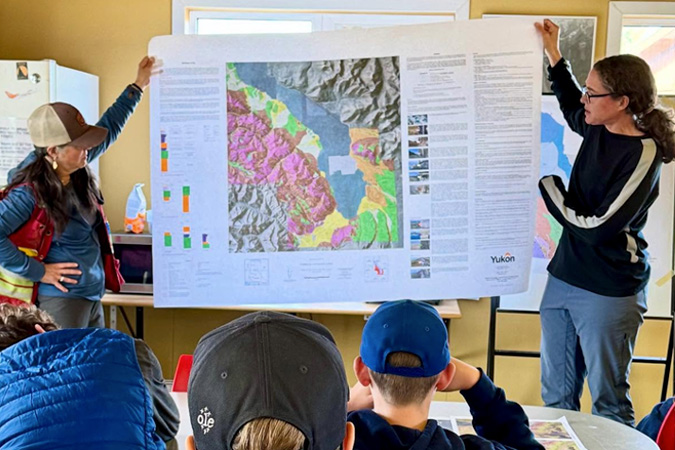
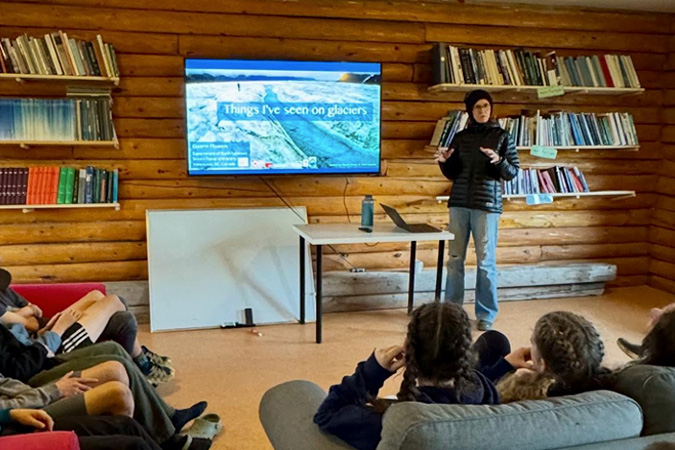
The Howl Experience is a registered non-profit organization and charity that provides land-based, experiential learning programs for youth and educators across Canada.
The Howl Experience youth program stayed at KLRS in August: “19 youth ages 17-35 came together from across Turtle Island to visit and learn on the territories of KFN and CAFN. During their time, they engaged with and learned from Elders, Knowledge Keepers, community members, artists and scientists.” The group also volunteered with CAFN, helping at the greenhouse and community member homes.
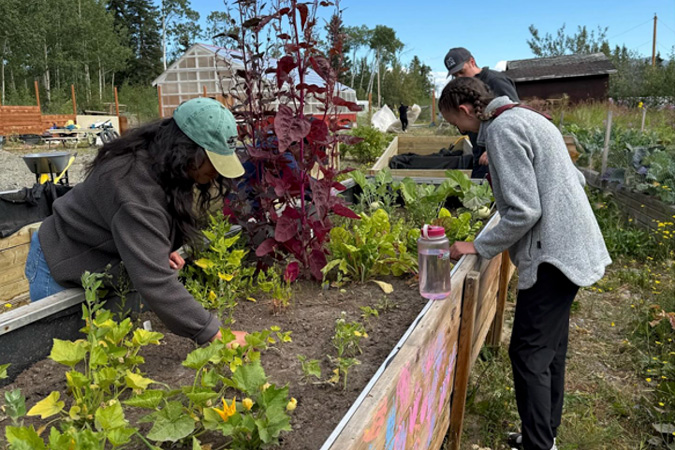
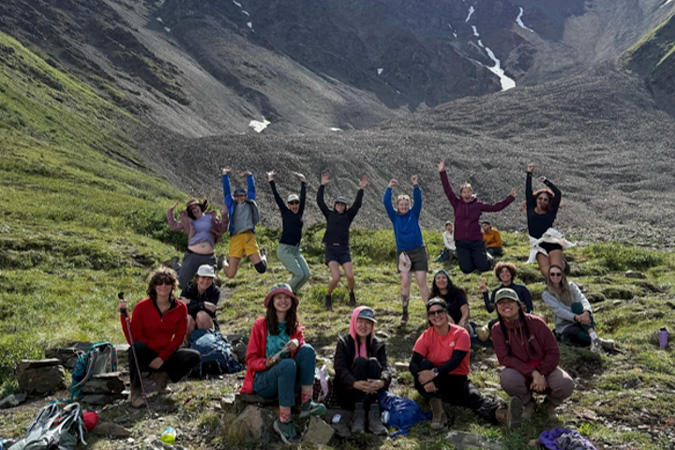
The Howl Experience brought 3 different cohorts of teachers and educators together for 6-day professional development programs in May, August, and September. Base camped out of KLRS to visit local communities, they focused on experiential learning and how to weave community building, reconciliation, climate action, and personal resilience through land-based learning into their classrooms.
As put by one of the September participants, Court Rustemeyer: “I was deeply moved by the land itself, and by the people who have lived in relationship with it for generations — on the traditional territories of the Kluane First Nation and Champagne & Aishihik First Nations. Being here in the Yukon, you can feel how deeply connected land and learning truly are. This week with the Experience Howl Professional Development experience, I had the chance to learn alongside incredible educators in one of the most stunning classrooms on earth. From the Kluane Lake Research Station to time with local Indigenous knowledge holders, every conversation and every landscape reminded me of the deep connection between people, land, and learning. The nights lit up with the Aurora Borealis, and the days were filled with mountains, stories, and moments of wonder. I can’t wait to carry these lessons forward — and hopefully, one day, bring students here to experience the same magic.”
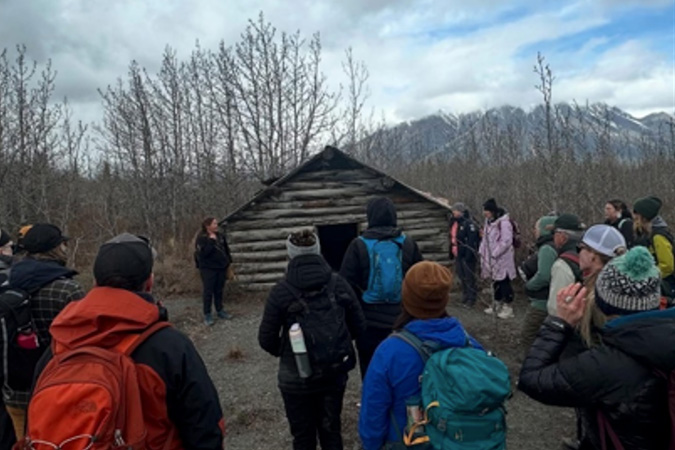
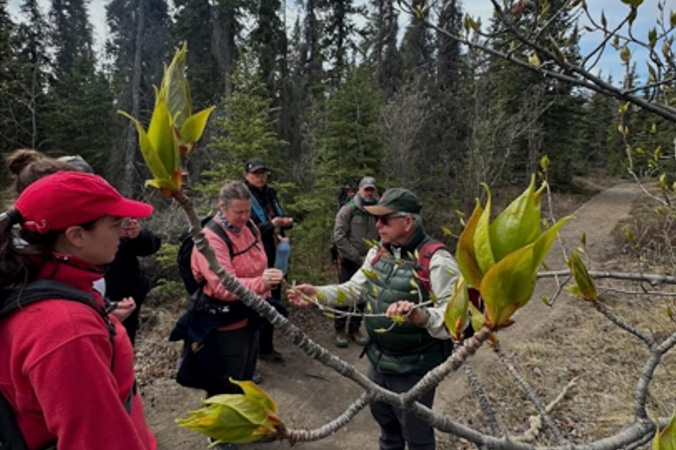
Six artists were hosted at KLRS in 2025, two for the Kluane National Park Artist Residency, and three associated with the Yukon Arts Centre and University of Calgary.
The Kluane National Park Artist in Residence program is a partnership between KLRS, Parks Canada and the Yukon Arts Centre. Two artists, Jaymie Campbell and Leslie Leong, were hosted at KLRS in 2025. Each artist had a two-week residency and held public art workshops at the station.
Residency: June 6 – 19, 2025
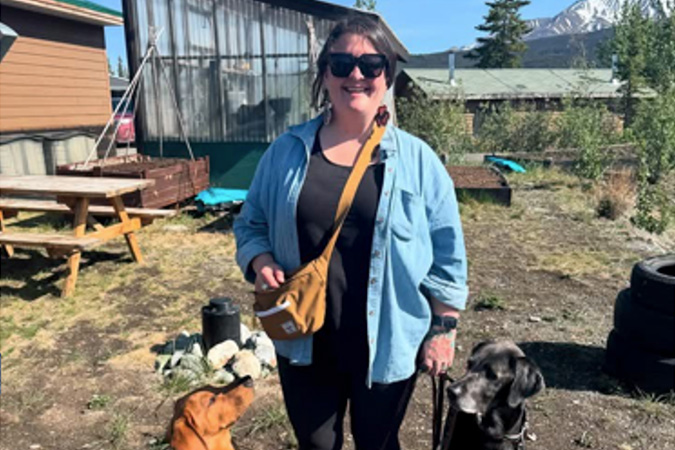
Jaymie Campbell is an Anishinaabe artist and writer from Curve Lake First Nation and currently resides in BC. As the designer behind White Otter Design Co, she incorporates traditional artistry techniques with contemporary and personal style. She aims to explore connection to land and culture through beadwork, writing, fashion and visual arts. She has also worked on consultation, negotiation, capacity building and protection of land, and continues to work in community building, policy development and mentoring.
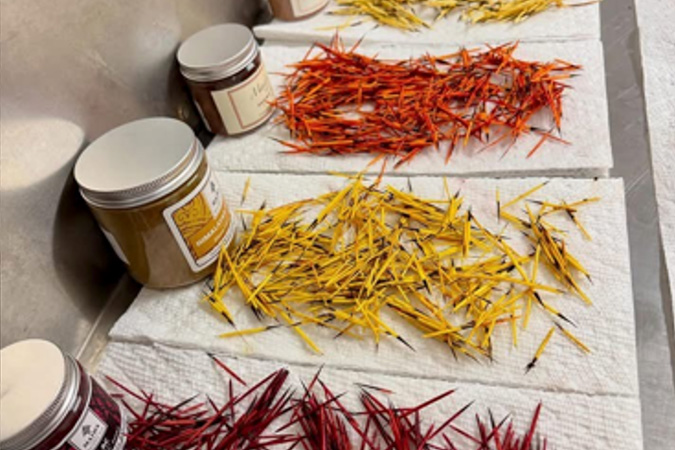
During her residency at KLRS, Jaymie enjoyed the land with her dogs and worked on her art, including beading earrings and dyeing porcupine quills (ethically harvested from her home) using natural plant dyes. She also facilitated a workshop at Mät’àtäna Män, joined a Kluane First Nation sewing circle, visited White River First Nation in Beaver Creek, and attended Champagne and Aishihik First Nations’ Da Kų Nän Ts’eddhèt Dance Festival.
Residency: August 4 – 12, 2025
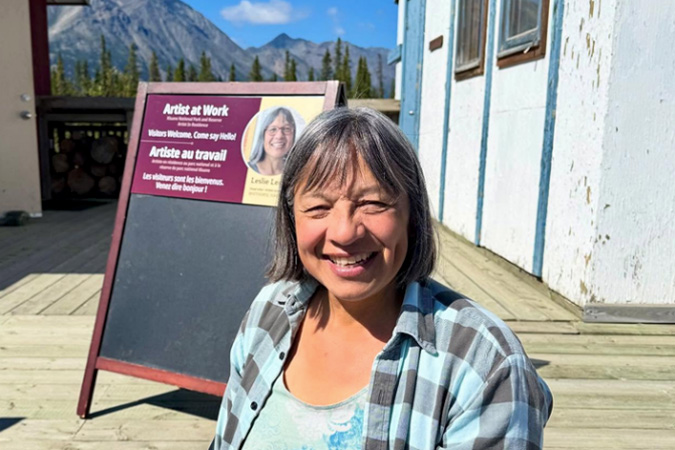
Leslie Leong is a visual artist focused on recycling and sustainability, living and working in Whitehorse, Yukon. “My art practice began in photography and ceramics over 35 years ago. Today I employ a variety of expressive forms often using unorthodox materials, forcing me to adopt non-traditional techniques. This results in a more open-ended process, sending me on a journey of enquiry and exploration.” A self-proclaimed “recovering engineer”, she can often be found rummaging recycling stations and landfill sites for materials to reuse and repurpose into her art forms.
While at KLRS, Leslie worked on her art, inspired by glacial ice she observed via air in the St. Elias Icefields and on her recent packrafting trip to Nàłùdäy (Lowell Glacier). She also enjoyed growing microgreens in recycled containers and started a sculpture using upcycled trays from our hydroponics unit. Leslie also facilitated a screen-printing workshop at Mät’àtäna Män and set up a field notebook workshop for a group of engineering students at KLRS.
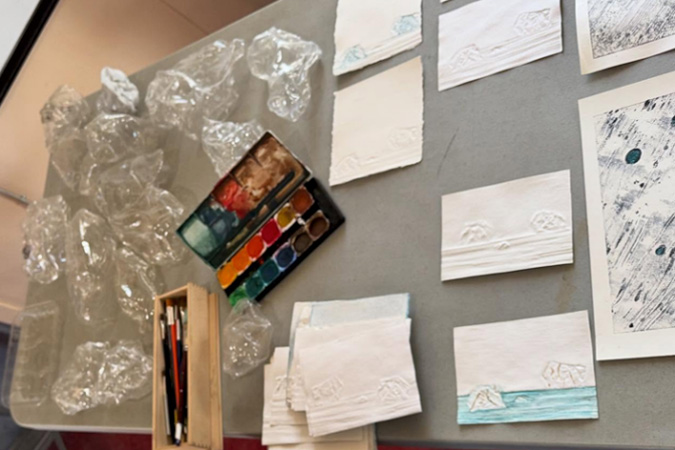
A group of artists (Ed Pien, Johannes Zits, and Karin van Dam) associated with the Yukon Arts Centre and a University of Calgary artist residency visited KLRS after their program in Dawson City. While at the station, they observed the beautiful landscapes in Kluane, and worked on art inspired by water, soil, and plants. They also enjoyed spending time in surrounding communities connecting with locals and learning from Elders.
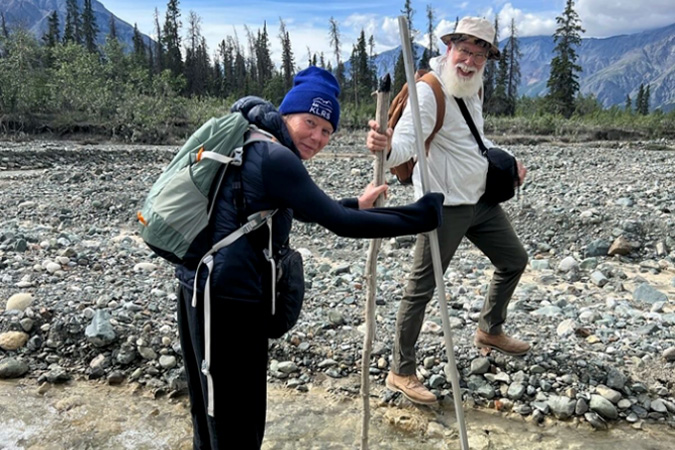
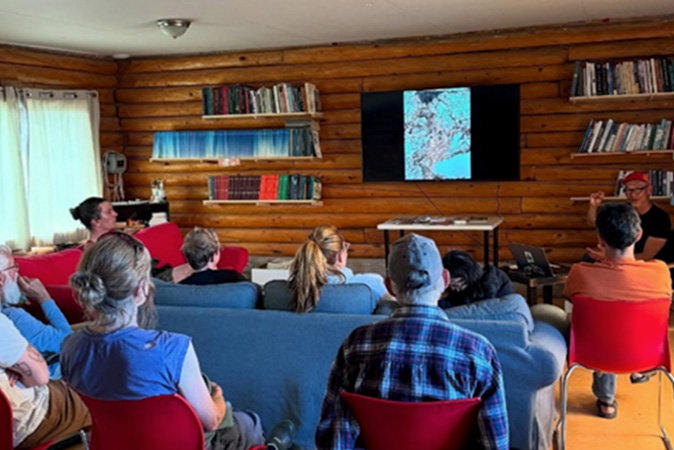
Participants attending the Environment Funders Canada 2025 National Conference in Whitehorse visited KLRS for a quick pre-conference field trip to learn about First Nations culture and research in Kluane.
Organization: University of Calgary
Principal Investigator: Dr. Marc Poulin
Dr. Marc Poulin and three undergraduate students from his physiology lab at the University of Calgary visited the Kluane area. The team focused on consultation and outreach related to high altitude physiology, with the potential of developing a field school in the St. Elias Icefield in the future.
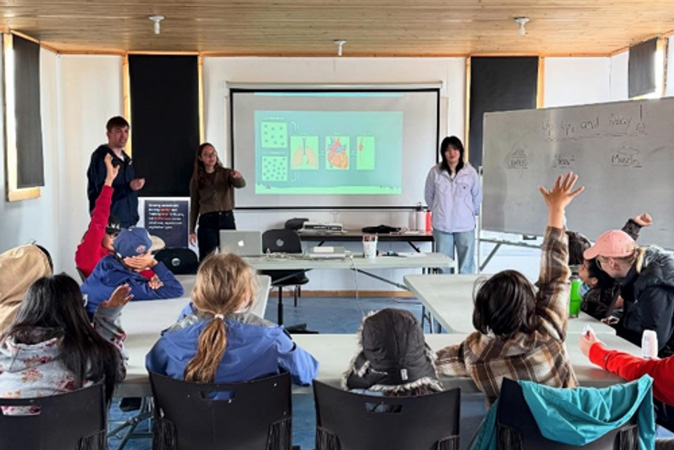
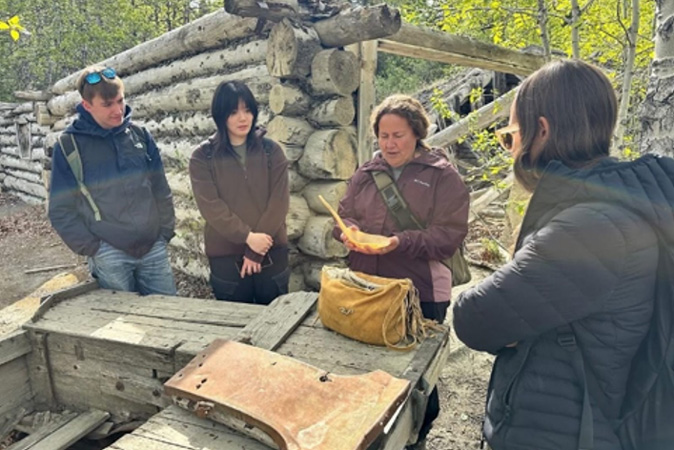
“We connected with members of Kluane First Nation, Champagne and Aishihik First Nations, staff, students, and local business owners who have been living and working in Kluane for many years. Our discussions highlighted potential collaborations, opportunities, and challenges that arise when researching at high altitude on the glaciers and within the community. We also had the chance to fly over possible research sites on glaciers in Kluane via airplane with Icefield Discovery for a potential future study on high-altitude physiology. The trip was capped with a fun teaching session on high-altitude physiology with the Kluane Lake School.”
Toolik Field Station, located in northern Alaska, is run by the University of Alaska Fairbanks. Mayra Meléndez-González, and Environmental Data Center Technician at Toolik, stayed at KLRS for a night on her way up to Alaska. She enjoyed touring KLRS and comparing the research stations.
Tonja Anderson from Honored Bound, a US non-profit that looks for historic fallen aircraft, joined Luke Copland’s glaciology group at KLRS in July 2025. Tonja joined the glaciologists on several of their field flights, attempting to locate a plane that had crashed in the Icefields several decades ago. The search was unsuccessful, but they narrowed down possible locations and gathered remote sensing data for glaciology research.
Pilots from Capital Helicopters stayed at KLRS while supporting glaciology fieldwork, including flying radar surveys and researchers to glaciers in Kluane.
Claire Bandet, PhD student at Wildred Laurier University, came to KLRS for a week to focus on some writing for her thesis. Her fieldwork is based elsewhere in Yukon studying environmental science.
Jean Bjornson from University of Ottawa taught hydrology field courses at KLRS in the past, with the last trip running in 2022. He returned to KLRS in 2025 with Denis Lacelle and colleagues after fieldwork elsewhere in Yukon to show Denis the station, equipment, and sites he used to take students as Denis might be teaching a course based at Kluane on occasion in the coming years.
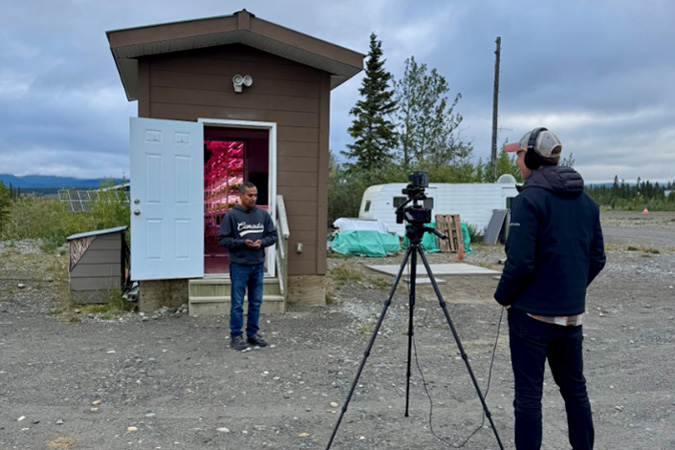
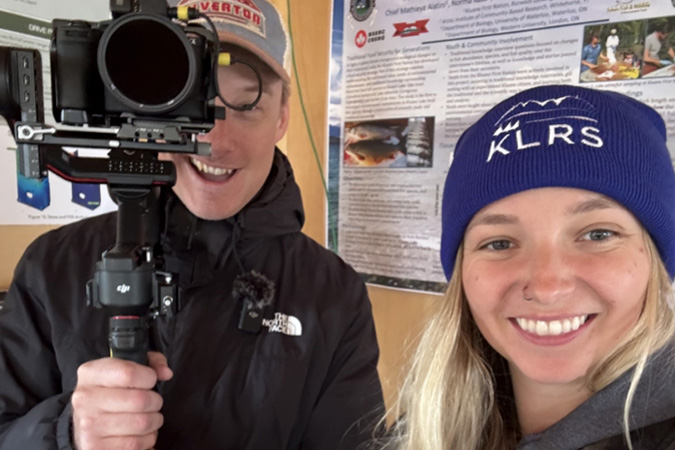
Cody Coates, a digital media specialist in the office of the Vice President (Research) at the University of Calgary, was sent to KLRS in August to assist with a Unit Review of AINA. A Unit Review is an evaluation process that assesses the quality of an academic department to help suggest future improvements. He interviewed KLRS staff about their job duties and filmed a station tour with manager Kim Hatcher, detailing all the infrastructure on site. Cody also filmed infrastructure related to the Ag1054 project (hydroponics unit, greenhouse, garden beds, microgreens unit) and interviewed staff about the project. Back in Calgary, he created two videos highlighting KLRS and Ag1054 with the footage he captured. The Ag1054 video has since been published.
Several Deans and professors from the University of Calgary stopped at KLRS for the day in late September: Dr. Catherine Laing (Dean of Nursing), Dr. Michelle Scott (Associate Dean of Nursing, Indigenous Education), Laura Spitz (Dean of Law), Dr. Robert Hamilton (Associate Professor – Law) and David Wright (Associate Professor – Law). They visited the Yukon for partnerships with Yukon University and different Yukon First Nations aiming to collaborate on nursing and law programs in the territory.
Organization: AINA (University of Calgary)
Principal Investigator: Dr. Craig Gerlach
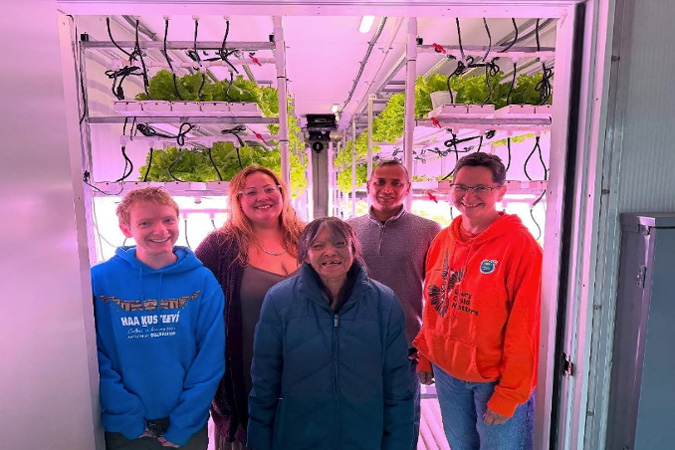
The Ag1054 project “Off-Grid Containerized Agriculture in the North” is an Arctic Institute of North America (AINA) research project based at the Kluane Lake Research Station (KLRS). Ag1054 uses a shipping container, formerly known as a Cropbox, as a controlled environment for hydroponic food production (plants grown in nutrient-enriched water instead of soil). The system is off grid, powered by solar energy with diesel backup. The unit can grow over 1000 individual plants at a time, providing crops like leafy greens and herbs. The project also includes a microgreen growing unit, greenhouse, and open field garden boxes. The 2025 Ag 1054 project team consisted of Dr. Craig Gerlach (Principal Investigator), Shahid Islaam (Agriculture Research Coordinator), and Pauly Sias and Jady Hurlburt (Agriculture Advisors).
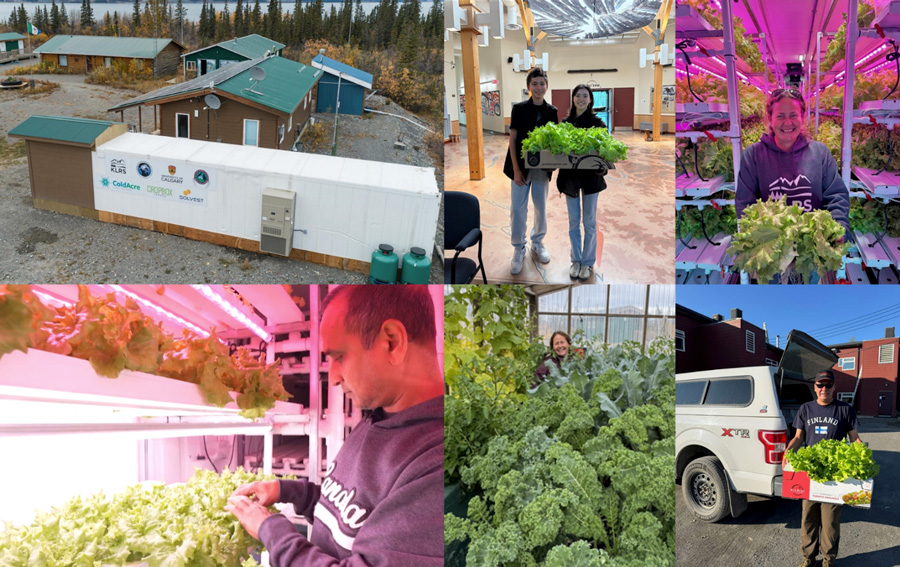
The hydroponic unit operated from June to early October 2025, with seedlings started under grow lights in May. The unit produced thousands of plants over the season (3300 lettuce, 350 cilantro, and 250 basil). The greenhouse and outdoor garden beds provided hundreds of plants, including radish (500), kale (96), broccoli (40), tomato (35) and cucumber (20). For microgreens, 120 trays of pea shoots, arugula, radish, mustard, and broccoli were grown.
The Ag1054 project is committed to community engagement and outreach; people are always welcome to visit KLRS and see the system. Harvested plants were donated to local communities throughout the season and used in the KLRS kitchen. Education is a priority for the project, including teaching local schools from Destruction Bay/Burwash Landing, Haines Junction, and Whitehorse about hydroponics. Shahid developed a short course requested by the Taku River Tlingit First Nation to teach them about operating hydroponic units. They have invited the team back to Áa Tlein (Atlin BC) this winter to see the units they started operating in their community.
The Ag1054 team is collaborating with Kluane First Nation (KFN) and Champagne and Aishihik First Nations (CAFN) to focus on growing additional plants in the hydroponics unit that the Nations are interested in. Plants will be selected after Nation-led and Ag1054-supported consultation with citizens. Surveys created by Trish Hume at CAFN were available to citizens for feedback on the hydroponics project at many community events. At the Dakwäkäda Mountain Festival at Da Kų Cultural Centre in November, the Ag1054 project donated prime rib for the community dinner. Ag1054 and KLRS team members had several productive meetings with KFN and CAFN throughout 2025. Many groups toured the hydroponics unit over the season, including school groups, artists, researchers, citizens, local residents and community members. Kari Johnston and Lahela Reid from Sha Shäw Corporation (CAFN’s community development corporation) met with Ag1054 on October 2, 2025, to discuss potential collaborations and knowledge exchanges.
The Canadian Northern Economic Development Agency (CanNor) provided funding for April 2025 – March 2026 for project staffing, operations, and upgrades. Many system improvements were made in 2025 for lighting, storage, and power. 48 new batteries were installed on July 22, 2025, to increase solar energy storage and minimize generator reliance for the KLRS power microgrid, where the hydroponics unit draws the highest concentration of station power. The hydroponic unit consumed ~1,937 kWh in a month, averaging 64.57 kWh per day. Grow lights accounted for 87% of the total usage, while the HVAC system and water pumps used 12% and 1%, respectively. Executives from CanNor visited the station on October 28, 2025, to tour the unit. A videographer from the University of Calgary visited KLRS in August 2025. He created a short video highlighting the Ag1054 project.
The Food Sovereignty Team from Taku River Tlingit First Nation (TRTFN) in Áa Tlein (Atlin BC) took a short course at KLRS to learn about our off-grid hydroponics system, where we grow plants from nutrient-rich water. They have 2 similar units back home and hope to operate their system starting this fall to provide fresh produce to their community. After a wonderful week together, they invited the Ag1054 team to visit Áa Tlein this winter, and we look forward to continuing to exchange knowledge with our neighbours.
Agriculture Research Coordinator Shahid Islam has been growing vegetables at KLRS in our greenhouse, garden, microgreen and hydroponics units for the Ag1054 project. He designed and instructed the short course, where TRTFN learned about how to operate and maintain the microgreen and hydroponics units. The group shared plans and photos from their own plant systems during a KLRS community night.