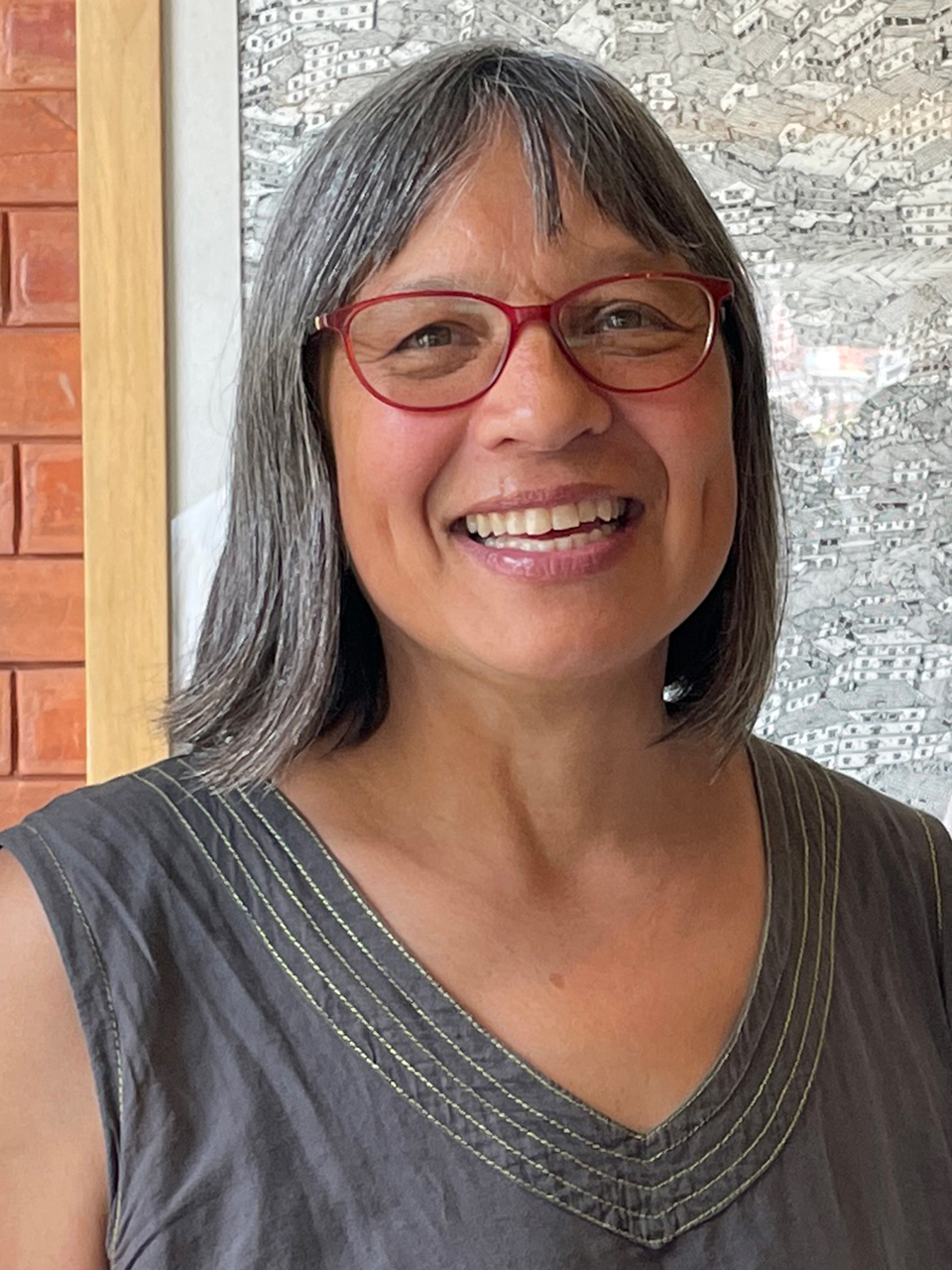
Christine Dunbar was born and raised in Yellowknife, Northwest Territories (NWT), and moved back to Yellowknife in September 2025 after living in Ontario for two years. While in Ontario, Christine attended Wilfrid Laurier University for her Master of Science in Integrative Biology degree, where she studied muskox seasonal detections in Thaıdene Nëné Indigenous Protected Area, NWT. For her undergraduate degree, Christine attended Lethbridge Polytechnic where she completed her Bachelor of Ecosystem Management degree and an undergraduate thesis on arsenic contamination within soil samples near Yellowknife.
She has extensive experience working in the North, having worked in multiple summer student positions with the Government of the Northwest Territories (GNWT), and later becoming an intern after finishing her undergraduate degree. As the Watershed Programs Intern, Christine worked in remote areas on the Slave River sampling water and fish for contaminants with both Indigenous governments and academia. For her master’s degree, she completed field work at Daring Lake Research Station in the NWT, deploying camera traps on the remote tundra landscape to capture wildlife. Christine has recently accepted a position with the GNWT as the Wildlife Laboratory/Field Technician.
Christine is Inuvialuit and Cree on her mother’s side, and Ukrainian and Scottish on her father’s. Her Inuvialuit name is “Nauyaq” which translates to “seagull”. Her mother, Carrie Norris, was born and raised in Inuvik, NWT, spending ample time on the land with her family growing up in the Arctic circle. Christine’s grandmother, Junice Arey, comes from Utqiaġvik, Alaska, and moved to the NWT when she was young with her family. Christine’s grandfather, Fred Norris, was Cree and came from Fort McKay (now known as Fort McMurray), Alberta. Christine is named after her great grandmother Christine Norris, who was a Cree woman known as one of the best trappers in the Mackenzie Delta. She lived most of her life at a remote bush camp near Inuvik, raising her children there and living off the land.
Christine began beading in 2020 during the pandemic to pass the time. She had a growing collection of beaded earrings and wanted to try making her own. This hobby quickly became a full-time business that would thrive. Christine has sold her beadwork across Canada, the United States and Europe, and had a pair of earrings appear in Vogue. She has hosted several workshops across Canada to help others connect to their Indigenous culture, or to those interested in learning the artform. Christine takes inspiration from nature, modern art, and her Indigenous heritage.
Christine is offering an artist talk and two workshops as part of her residency.